Conversion Blueprints Built Around Real Cruising Profiles
Every project starts with route logic, berth conditions, speed expectations, hotel consumption, and service priorities. That means the proposed electric architecture reflects how the yacht will actually be used, not an abstract power target. We model load scenarios, reserve margins, and charging cadence to avoid oversizing, underperforming, or sacrificing comfort. This owner-specific planning leads to cleaner weight distribution, smarter battery placement, and propulsion behavior that feels natural from departure to docking.
Refined Machinery Spaces with Easier Maintenance Access
Electrification is not only about replacing engines; it is also an opportunity to reorganize technical spaces for clarity and longevity. We structure cable routing, ventilation, cooling lines, access panels, and monitoring hardware so technicians can inspect, isolate, and maintain systems with less friction. The result is a machinery zone that looks calmer, works cleaner, and reduces service-time confusion for crews and partner yards.
Silent Maneuvering and Low-Vibration Guest Comfort
Owners value the sensory change as much as the sustainability benefit. Electric or hybrid propulsion sharply improves onboard atmosphere by cutting vibration, smell, idle noise, and harsh transitions during harbor work. This creates a more premium arrival experience, a calmer aft-deck conversation environment, and less fatigue for captains during repetitive maneuvering or transfer operations.
Future-Ready Monitoring and Energy Intelligence
Integrated dashboards, battery analytics, fault logic, and remote reporting help owners and crew understand the yacht’s energy behavior with far greater precision than legacy propulsion often allows. We make data readable, actionable, and relevant, turning technical telemetry into confidence for trip planning, marina charging, and preventive maintenance decisions.
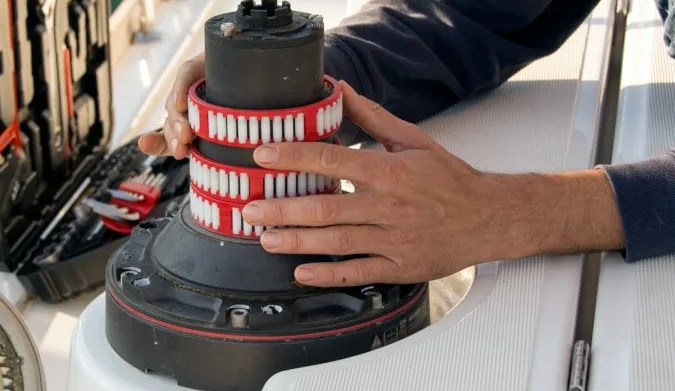
Integrated supplier coordination from survey to sea trial.
Because retrofit success depends on more than component quality, we orchestrate the sequence between naval assessment, propulsion vendors, electrical installers, software specialists, cooling partners, and commissioning teams. That coordinated delivery reduces delays, design clashes, and costly adjustments late in the yard schedule.
- Battery and safety zoning planned with service access in mind.
- Charging strategy aligned with berth infrastructure and turnaround routines.
- Sea-trial validation focused on responsiveness, temperature control, and usable range.